
New Technology Drives Safety, Efficiency, and Visibility Across Watco
Freight transportation may be one of the oldest industries, but at Watco, innovation is anything but old school. Across our network, teams are adopting new technologies that improve safety, increase efficiency, and give customers better visibility into operations. Here are a few examples.
At the Industry Marine Terminal in Pennsylvania, Watco is piloting smart security cameras designed to detect movement and distinguish between animals and potential intruders. When something is detected, a third-party monitoring team evaluates the situation and notifies Watco team members or local authorities as needed.
“We plan to install them at the Dravosburg (Pennsylvania) terminal next,” said John Snow, vice president of operations. “That’s a 24/7 facility. With the cameras, we can move to two shifts and close on weekends.”
The same technology is being evaluated at alloy terminals, where it could help verify materials are loaded correctly. If alloys are mixed improperly, it can result in costly penalties, and the added oversight provides another level of assurance while reducing the chance of human error.
Cameras are also now installed on Watco semis at select terminals where teams haul freight for customers. This added visibility is helping teams resolve claims faster and protect Watco and its customers from unnecessary costs.
After a vessel struck the dock at the Port Arthur Dedicated Terminal in Texas and left the scene, the team had no immediate visibility into what happened. Collision detection monitors, water sensors, and overhead cameras have since been installed at Watco locations with floating docks.
Today, those systems provide instant alerts when an impact occurs, detect potential water intrusion, and capture video of the incident from multiple angles, giving teams immediate awareness.
Senior Vice President of Operations Jason Ford says the system has already proven its value. “Port Arthur was struck again. Everything worked exactly as it should have. We knew as soon as it happened and were able to identify the vessel.”
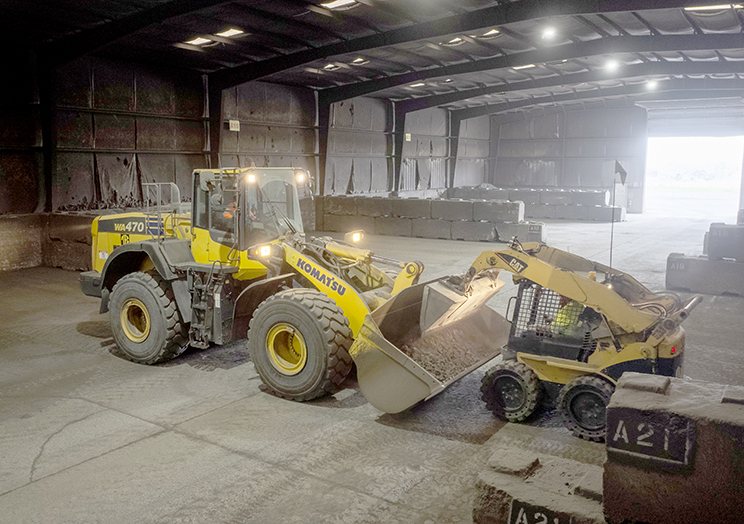
Watco is also working with external partners to test new technologies that improve safety and efficiency. At the Wood River Terminal in Illinois, the team is piloting Intramotev’s TugVolt technology, an electric, remote-controlled railcar switching unit built from a converted boxcar. Operated by a team member standing outside of the switching area, the unit can move cars around the switching yard while lowering safety risks. Watco teams are also evaluating remote skid steers for use in higher-risk environments, such as inside barges or vessel hulls.
On the rail side, Watco continues to invest in its locomotive fleet to reduce emissions, lower costs, and improve performance. Over the past year, 29 additional auxiliary power units or layover heaters have been installed. These systems allow locomotives to shut down during cold weather instead of idling, reducing emissions, noise, and fuel consumption. Watco has installed this technology on 233 locomotives across more than 30 locations.
Additionally, 14 locomotives have been equipped with distributive power kits. This allows engines to be placed strategically within the consist and controlled from the lead unit. They improve train handling and safety while decreasing fuel burn.
By the end of June, 300 exterior-facing cameras will be equipped on locomotives. Shawn Ditsch, director of fleet solutions for locomotive services, says the cameras help analyze crossing incidents and protect Watco crews from liability. In one case, video footage confirmed the crossing gates were functioning properly, resolving a claim quickly.
Technology investments are also making it easier for customers to do business with Watco. On May 1, Watco Fleet Management launched a new Car Order Management System that streamlines how customers order Watco-controlled equipment. The platform allows users to submit requests, view order history, reuse previous patterns, and receive real-time status updates.
“The new system allows customers to use predefined patterns for origin–destination pairs, car types, and commodities, and provides a more efficient and transparent ordering experience,” said Karina Peralta, director of Railcar Management. “These structured selections will help reduce manual entry, minimize errors, and save time throughout the ordering process.”
Behind the scenes, Watco’s Safety team is also benefiting from better technology integration. By connecting multiple tracking systems into PowerBI, teams can now view service hours, certifications, incidents, efficiency testing, audits, and more using a single dashboard. What once required manual reporting is now automated and updated daily.
“We can run reports the way we want, show the info we want, and label it the way we want,” said Brent Shields, senior vice president of environmental health and safety. “It automatically runs every day, and we can see where everyone stands in real-time. It’s saving hours of manual updates, and anyone can filter down to their location from a single dashboard. It’s really helping us be more accurate and stay on top of our reporting.”
Across Watco, these technologies are doing more than modernizing operations. They are helping teams respond faster, reduce risk, and deliver a safer, more reliable experience for customers.