
Building for the Future: How Watco Railroads Update Infrastructure
For 200 of America’s 250 years, railroads have helped power the nation’s economy by moving freight and people across the country. Today, the nation’s 135,000-mile freight rail network carries building materials, energy, consumer goods, agriculture products, and nearly everything we use every day. To meet the challenges of today’s supply chain, rail infrastructure must be maintained, strengthened, and improved.
It’s especially important for short lines, where rail components may be more than a century old. That’s why Watco is investing more than $500 million into dozens of projects on 12 short lines across nine states. Many of these projects wouldn’t be possible without grants from local, state, and federal governments and partnerships with customers and economic development groups.
The biggest projects are assisted by Consolidated Rail Infrastructure and Safety Improvements (CRISI) grants administered by the U.S. Department of Transportation and Federal Railroad Administration. The South Kansas & Oklahoma (SKOL), Stillwater Central (SLWC), Louisiana Southern (LAS), Ringneck & Western (RWRR), Timber Rock, Blue Ridge Southern, and Kanawha River railroads are all currently working on CRISI projects or plan to start them in the coming months.
Individual state departments of transportation are also valuable partners, providing funding for local projects that enhance safety and economic development. Kansas, Michigan, and Wisconsin are investing in upgrades on the SKOL, Kansas & Oklahoma (KO), Grand Elk, Great Lakes Central, Wisconsin & Southern railroads, and Fox Valley & Lake Superior Rail System. Additionally, both the federal and many state governments have established short line tax credits that reward railroads for investing in their infrastructure.
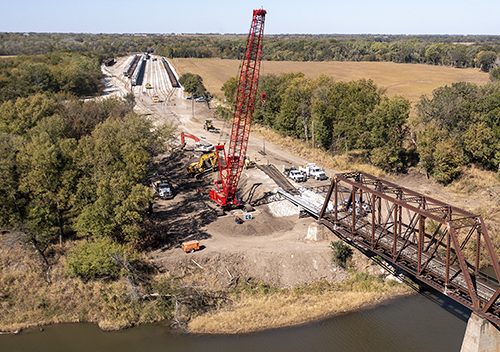
Across these initiatives, Watco is upgrading 190 bridges, replacing or rehabilitating nearly 300 miles of rail, improving dozens of switches and crossings, and installing more than 100,000 crossties. Aging timber and steel bridges are being rehabilitated or completely replaced with concrete structures or fill over culverts. They are also being fitted with heavier rail to bring them up to 286k standards for today’s heavier railcars. The rail replacement projects also support this heavier capacity. The new crossings make them safer for drivers and our team.
We’re making these upgrades with the future in mind. All these investments prioritize longevity, resiliency, and ease of maintenance. And we’re planning for increased traffic. Local economic groups and customers are partnering with these railroads to build sidings and install turnouts to serve new businesses or increase their rail shipping capacity. The SLWC, SKOL, RWRR, LAS, and KO are all building passing tracks and expanding yards to accommodate higher volumes as new customers come online.
Railroads and the American economy go hand-in-hand. There’s no safer, more efficient way to move goods across the country. But that relationship requires a strong foundation. We’re proud to keep America moving, but we couldn’t maintain that infrastructure without assistance and partnerships at all levels.
Keep an eye out as we highlight the impact of these investments across the Watco network.