
When It Comes to Aggregates, Watco Rocks
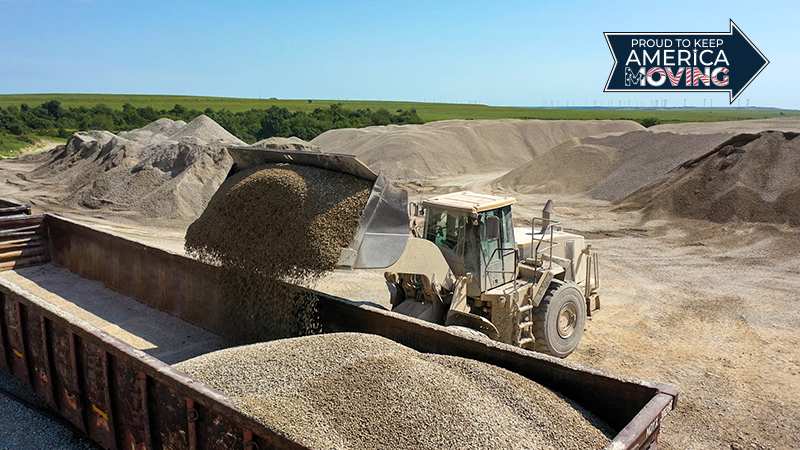
When it comes to hauling some of America’s most-used commodities — aggregates — Watco rocks.
Gravel, crushed stone, and natural sands are the top U.S. freight commodities by mass, and account for 2.7 billion tons of cargo annually, according to the Bureau of Transportation Statistics. These are considered “construction aggregates,” and in 2025, these along with hydraulic cement made up nearly 70% of Watco’s aggregate rail carloads.
“We have great relationships with some of the biggest aggregate companies in America,” said Jimmy Patterson, senior vice president of rail operations. He noted that aggregates have been the leading commodity moved by rail at Watco so far in 2026 and that aggregates and agriculture would remain the top two. “Aggregate customers, like all our customers, are an essential part of Watco’s rail network,” he said.
While construction aggregates aren’t a major part of overall tonnage at Watco terminals and ports, one location sees a massive amount. At Watco Greens Port in Houston, “We handle hundreds of thousands of tons via vessel annually,” said Ernie Farrand, vice president, “and 600 to 1,000 railcars a month.”
Construction aggregates are not only the foundation of U.S. freight, they’re also often foundational to building America. They’re transported by rail, truck, barge, and ship for construction, infrastructure, and industrial manufacturing. Sample uses include:
– Concrete production: Mixed with cement and water to form the structural base of buildings and bridges
– Fill material: Used in general land grading and site preparation.
– Roads and railroad track: Used as a stabilizing base layer and sub-base for highways, asphalt, and railroad beds. (With railroading as a core service, Watco is certainly familiar with railroad beds’ ballast. A top layer of jagged-edged, crushed stone is engineered to wedge tightly together under the weight of trains to prevent track from shifting. It’s also good for drainage and dampening vibration. Beneath that layer, finer materials are compacted into a dense sub-ballast layer that helps maintain foundational strength.)
Some common construction aggregates might have additional, non-construction end uses. For example, sand and crushed stone are inside the microchips that power our phones, computers, smart appliances, and much more. A typical new passenger car today contains between 1,000 and 3,000 microchips.
Gravel, crushed stone, and sand might seem basic and uncomplicated. But together, they help build the infrastructure that powers commerce, connects communities, and supports everyday life in America.