
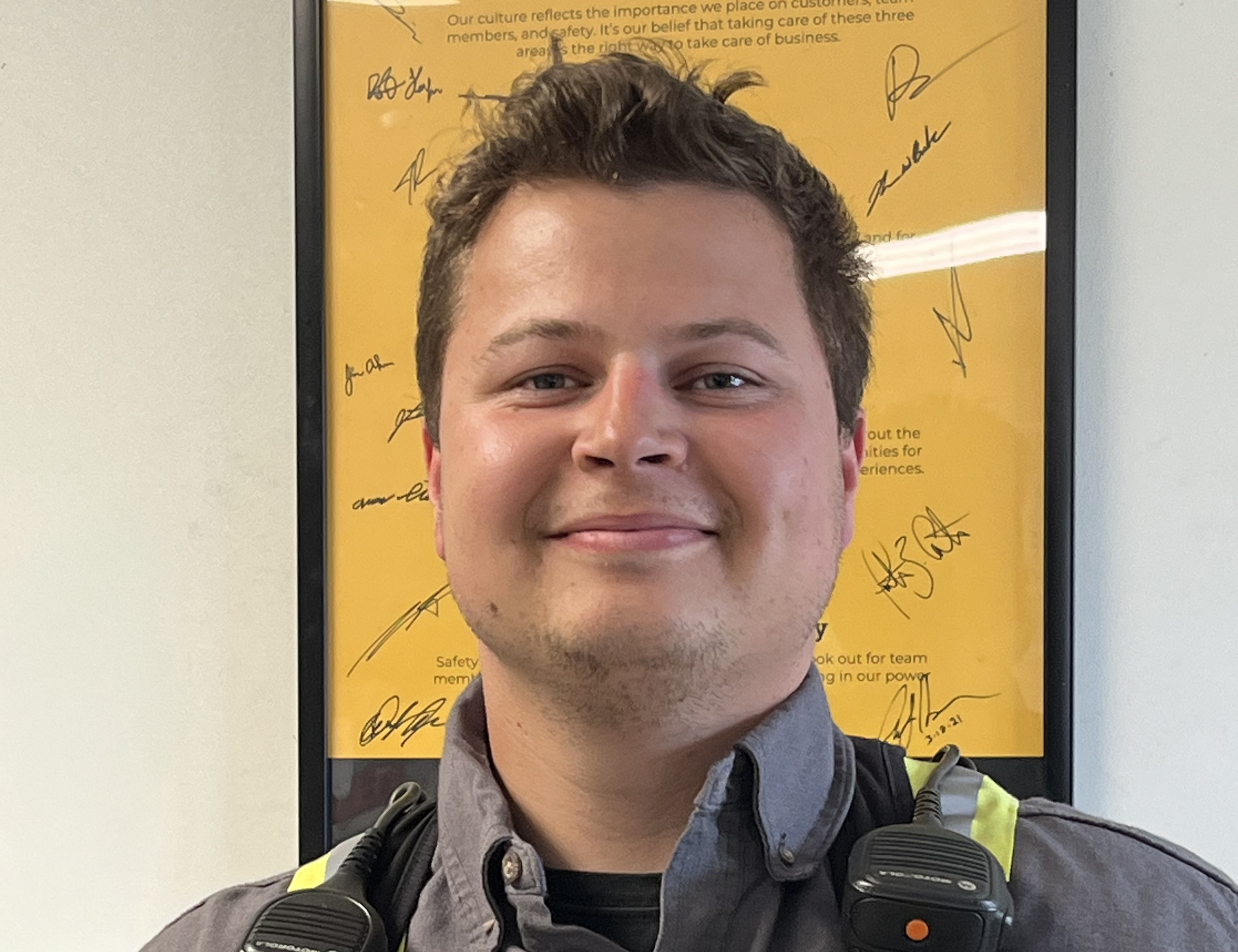
Red Flags Lead to a Big Catch

At this site, railcars carrying crude oil are regularly dropped off by another railroad. From there, the Watco team moves these cars to the rail facility, where the product is transloaded to storage. While the team frequently handles unit trains, they also receive, handle, and unload single cars.
As a shift lead, Ferguson directs the offloading of railcars. On this particular occasion, it was extremely foggy, and a single railcar was dropped off 30 minutes before the crew’s shift ended at 4 a.m. A single car delivery at that time of day is uncommon; they are normally delivered during the early afternoon. Instead of passing this railcar to the next crew to handle, the night team took the lead.
Almost immediately upon receiving the railcar, Ferguson spotted red flags. For one, the safety placards on this railcar were handwritten in place of the standard plastic version.
Some of the handwritten placards were folded, making it more difficult to easily read and identify the contents inside. Upon further review, Ferguson and the team found the information listed on the placard didn’t match what’s typically listed for a car carrying crude oil.
“Everything about the receipt of this car was off,” Terminal Manager Thomas Frey said. “But Connor dug in and did everything right in order to safely get to the bottom of it.”
Ferguson’s next step was to search for the car number on his list, but it wasn’t there. When it came to this railcar, he had no tracking information or a bill of lading. By that time, his shift had ended.
Rather than leave, he stayed on to further investigate and notify the incoming crew and Frey. It’s a good thing he did. It was later determined that the railcar was mistakenly dropped off at the wrong location.
To make matters worse, the contents inside the railcar ended up not being crude oil, but another chemical. If the team had unloaded it, it could have posed a safety risk as they didn’t have the training or adequate PPE to handle this commodity. Additionally, if the chemical had been added to storage, it would have created a major problem within the customer’s facility.
Frey said, “Swimming downstream is easy, but swimming upstream takes work. Connor has no problem doing the work and motivating the crew. He puts 100 percent into everything he does.”